Remote work has modernized the modern workplace, transitioning from a niche concept to a fundamental part of global work culture. With advancements in technology and changing employee preferences, remote work is no longer just a trend but a permanent shift in how businesses operate. As companies and employees adapt to this new normal, it’s essential to understand the key trends shaping the future of remote work and their implications for the global workforce.
The Rise of Remote Work:
Nowadays people are more into working from home or other place than finding some traditional offices to work. This trend is getting popular because of advancements in technology and changes in work preferences. Let us understand this in the simplest terms.
1. Revolution of Technology:
Internet tools have changed the way of working through tools like video calls, emails, and online collaboration platforms like Zoom, and Slack. Now it is not necessary to go to fixed office space, because you can handle your work and meetings online.
Example: People in the past went to the post office to send letters, but now they can send instant messages through emails. The same thing has happened with work also.
2. Fast-Forwarded By Pandemic:
During the time of COVID-19, companies had to close off their offices and employees had to work from home. This experiment became successful, and companies watched that productivity was not affected, but it increased sometimes.
Example: Places like schools and offices that never worked remotely, they too encouraged this experiment through Zoom and Microsoft Teams.
3. Flexibility and Freedom:
Remote work gives people a lot of flexibility. Now people work according to their time and place. This means that you spend more time with your family or work from your favorite café.
Example: In the past, you needed to eat food at restaurants, but now you can order anything and the meal will be at your doorstep, and you can enjoy the meal at your own home.
4. Connection of Global Trend:
Remote work has opened doors for talent in the world. Now companies can hire any skilled professional from any country without even relocating them.
Example: An American company can hire software developers from India and Pakistan who can work from their homes.
5. Cost Efficiency:
Remote work is quite cost-effective for companies. The expenses for office space rent, electricity, and commute get reduced. For employees as well the expense of time and money is saved.
Example: First you need to go to the market by transport, but online shopping has saved that time and cost.

Key Remote Work Trends Today:
The meaning of this is to determine which new trends are happening in remote work that are impacting people and companies nowadays. The trend of remote work has gained so much popularity that is affecting companies and employees to make new changes. Let us understand this in the simplest terms.
1. Hybrid Work Model:
When you work from home sometimes and sometimes from an office that is known as the Hybrid Model. This trend has become quite popular because it provides flexibility. You can balance your time and also have the feeling of an office sometimes.
Analogy: Imagine, during your school days, you used to do a combination of online classes and school, this is also the same.
2. Increased Use of Collaboration Tools:
In remote work, collaboration tools are very important, like Zoom, Microsoft Teams, and Slack. These tools help you in virtual meetings, messaging, and file sharing. You can work with your team easily, even if you are in different places.
Example: If you need to share a file with your colleague or have a meeting, these tools connect you without any problem.
3. Focus on Work-Life Balance:
The biggest trend of remote work is people are trying to have a better balance between their personal life and work. You can adjust your work with time focusing on home.
Analogy: Just like you keep the portion size in mind while serving food on a plate, it is equally important to balance work and personal life.
4. Digital Nomad Lifestyle:
Digital Nomads are those people that remotely work from any part of the world. This trend has grown when remote work became more flexible and accessible.
Example: If you’re a writer, you can work anywhere with your laptop, be it the beach, or a coffee shop.
5. Mental Health and Wellbeing:
Another trend emerging from remote work is that people are focusing more on their mental health and wellbeing. Working from home, people are managing their stress through exercises, meditation, and breaks.
Analogy: Just as you exercise to keep your body healthy, it is important to take care of your mental health as well.
6. Remote Work Tools Becoming More Specialized:
There are some advanced tools available for remote work that are specially designed for remote work. These tools enhance productivity and team collaboration. Like project management software or virtual co-working spaces.
Example: Tools like Trello or Asana organize project management, helping you track your work.
7. More Focus on Employee Autonomy and Trust:
Companies have now started to give more autonomy to their employees. Meaning now they have the freedom to do their work in their own technique and according to their time as well.
Analogy: Imagine that you are given a puzzle, and you have to decide how to solve that puzzle.
Industries Embracing Remote Work:
These are those fields or industries that give the flexibility to perform the work from their home or any other place. At first only tech jobs offered remote work, but most industries have adopted this. Let us understand this in the simplest terms.
1. Technology and IT industries:
For remote work technology and IT industries are most flexible. Software developers, web designers, and IT support specialists handle their work through online tools. The most important things required for these industries are a Laptop and an Internet Connection.
Just like an artist needs a canvas and colors to create his paintings. IT professionals need laptops and software to do their work.
2. Marketing and Digital Media:
It is very easy to make Digital marketing and content creation remote. Social media managers, SEO experts, and content writers can easily work from anywhere efficiently. These people make marketing campaigns, blog posts, and ads that are only executable on online platforms.
SEO Tip: Be sure to mention keywords like Digital Marketing Remote Jobs and CO Expert Remote Work here.
3. Education and E-Learning:
Now even private tutors and e-learning platforms are teaching remotely, other than schools and colleges. Teachers are teaching students using Zoom or Google Meet, and students have access to it from anywhere.
Example: Platforms like Khan Academy and Coursera have made education online and accessible.
4. Healthcare and Telemedicine:
Doctors and therapists are also giving remote consultations. Patients can now have their health checkups at home through telemedicine platforms. Mental health counselors give support to their patients through video calls.
Think about it, you don’t need to go to a doctor, but he can solve your problem via your phone or laptop, just like you order something online while sitting at home.
5. Finance and Accounting:
Finance-related jobs like accountants, financial advisors, and tax consultants are doing remote work now. These people work for their clients through platforms like QuickBooks and Excel, without needing a physical office.
SEO Tip: The keywords like Remote Finance and Work from Home are very helpful here.
6. Customer Support and Call Centers:
Customer service representatives are doing remote now, where they handle emails, chats, and calls. This is proven to be cost-effective for companies.
Example: Imagine you talk to a support agent to get a product issue resolved, that agent is solving your problem while sitting at home.
7. Creative Industries:
Graphic designers, video editors, and writers are also doing work remotely. In creative industries, you only need to execute the tools and your ideas.
Just like a baker needs a separate space in his kitchen to make cakes, creatives can do their work in their home or anywhere else.

Benefits of Remote Work:
1. Increased Productivity:
Contrary to initial skepticism, studies have shown that remote workers often outperform their in-office counterparts due to fewer distractions and flexible schedules.
2. Cost Savings:
Both employees and employers benefit financially. Employees save on commuting and dining costs, while companies can reduce office expenses.
3. Work-Life Balance:
Remote work allows employees to spend more time with family, pursue hobbies, and enjoy a healthier lifestyle.
Challenges in Remote Work:
1. Collaboration Barriers:
Lack of face-to-face interaction can hinder team dynamics and brainstorming sessions.
2. Communication Issues:
Misunderstandings may arise in written communications, leading to inefficiencies.
3. Mental Health Concerns:
Isolation and burnout are common challenges, highlighting the need for mental health support.
4. Cybersecurity Risks:
With remote work, ensuring secure connections and protecting sensitive data is paramount.
Emerging Technologies Supporting Remote Work:
1. Cloud Computing:
Cloud platforms allow teams to access files and applications from anywhere, ensuring seamless collaboration.
2. Collaboration Tools:
Platforms like Zoom, Slack, and Microsoft Teams have become indispensable for virtual meetings and team communication.
3. AI-Driven Productivity Tools:
AI tools help automate repetitive tasks, enhance productivity, and provide data-driven insights.
4. Virtual Reality (VR):
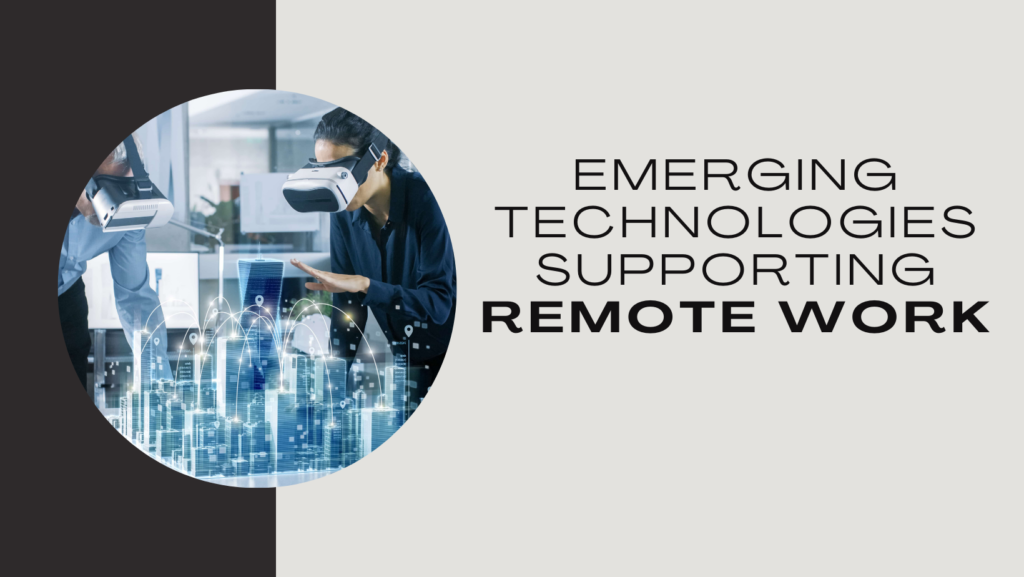
VR is poised to make remote collaboration more immersive, replicating in-person interactions in virtual environments.
The Role of Leadership in Remote Work:
1. Managing Remote Teams:
Effective leadership is crucial for fostering collaboration and accountability in remote teams.
2. Ensuring Inclusivity:
Leaders must ensure all team members feel valued, regardless of their physical location.
3. Training for Digital Strategies:
Organizations are investing in leadership development programs to equip managers with skills for leading virtual teams.
Remote Work Policies:
1. Creating Effective Policies:
Clear guidelines on work hours, communication expectations, and performance metrics are essential.
2. Balancing Flexibility and Accountability:
While flexibility is a key benefit, maintaining accountability ensures productivity.
3. Legal Considerations:
Employers must navigate tax implications, labor laws, and compliance challenges in remote setups.
The Impact on Urban and Rural Areas:
Remote work is decentralizing traditional urban work hubs, creating opportunities for rural talent while presenting challenges in terms of infrastructure development and internet connectivity.

Environmental Impact of Remote Work:
By reducing commuting emissions, remote work contributes to environmental sustainability. However, increased home energy usage presents new challenges.
The Future of Workspaces:
Co-working spaces, smart home offices, and technology-integrated setups will play a vital role in the evolution of work environments.
Global Perspectives on Remote Work:
Remote work adoption varies globally, with developed countries leading the way. Cross-cultural collaboration and government support are shaping its trajectory.
Career Opportunities in a Remote Work World:
With remote work becoming mainstream, opportunities in freelancing, gig economy roles, and remote-friendly positions are expanding rapidly. Upskilling is key to staying competitive.
Predictions for the Next Decade:
Expect advancements in AI, global talent marketplaces, and a redefinition of the workplace as remote work continues to evolve.
Conclusion:
Remote work trends are redefining the future of work, offering unparalleled flexibility and opportunities while presenting unique challenges. As businesses and individuals adapt, embracing these trends will be key to thriving in the evolving workplace landscape.
FAQs:
1. What is driving the popularity of remote work?
Technology advancements and employee preferences for flexibility are key drivers.
2. Which industries are most remote-friendly?
Technology, media, healthcare, and education are at the forefront.
3. What are the challenges of remote work?
Common challenges include communication barriers, cybersecurity risks, and mental health concerns.
4. How can companies support remote teams?
By investing in collaboration tools, providing mental health resources, and fostering inclusive cultures.
5. Is remote work environmentally sustainable?
It reduces commuting emissions but increases home energy usage.
6. What skills are essential for remote careers?
Digital literacy, communication, and self-management are critical.